- Date : 10 กรกฎาคม พ.ศ.2568
- Venue : Online
- Organizer : สหภาพสากลไปรษณีย์ (Universal Postal Union: UPU) และ สถาบันฝึกอบรมและวิจัยแห่งสหประชาชาติ (United Nations Institute for Training and Research: UNITAR)
- Link Webinar : https://youtu.be/psaZVQfkPVM?si=jVAyoVUEvYZ0Uejn
- More information about the event : https://www.facebook.com/share/p/1689rySSbE/
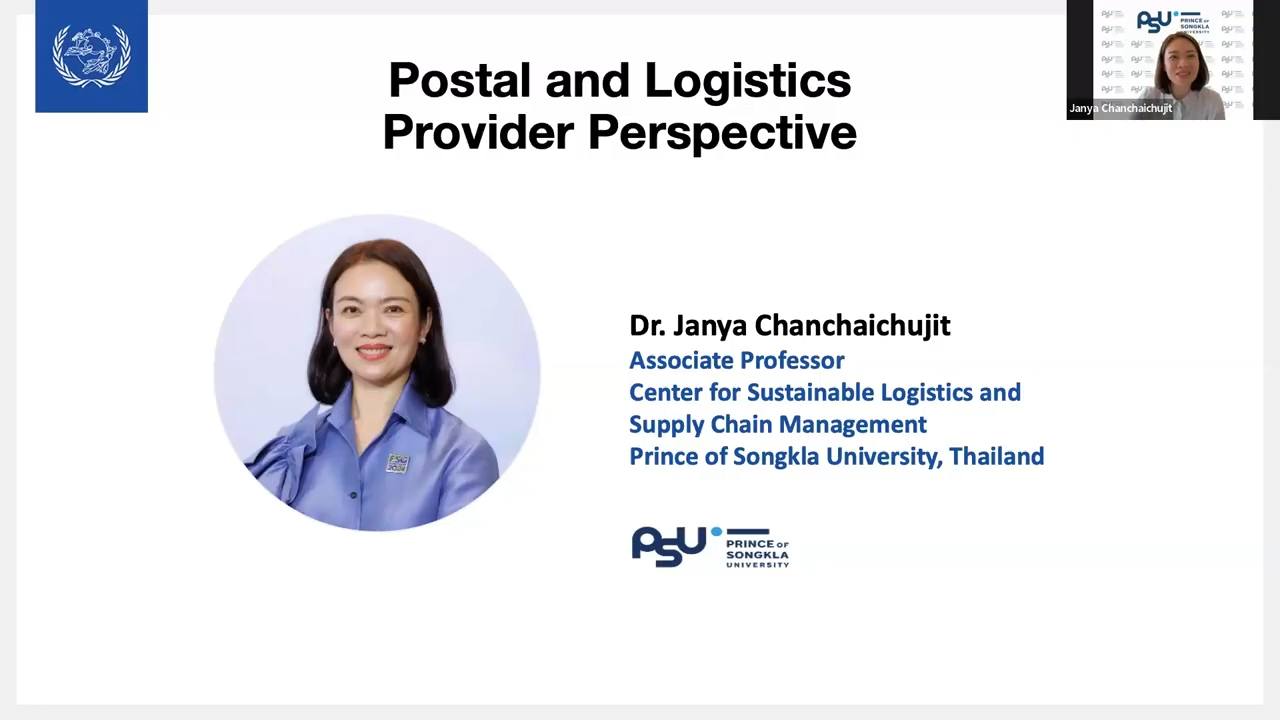
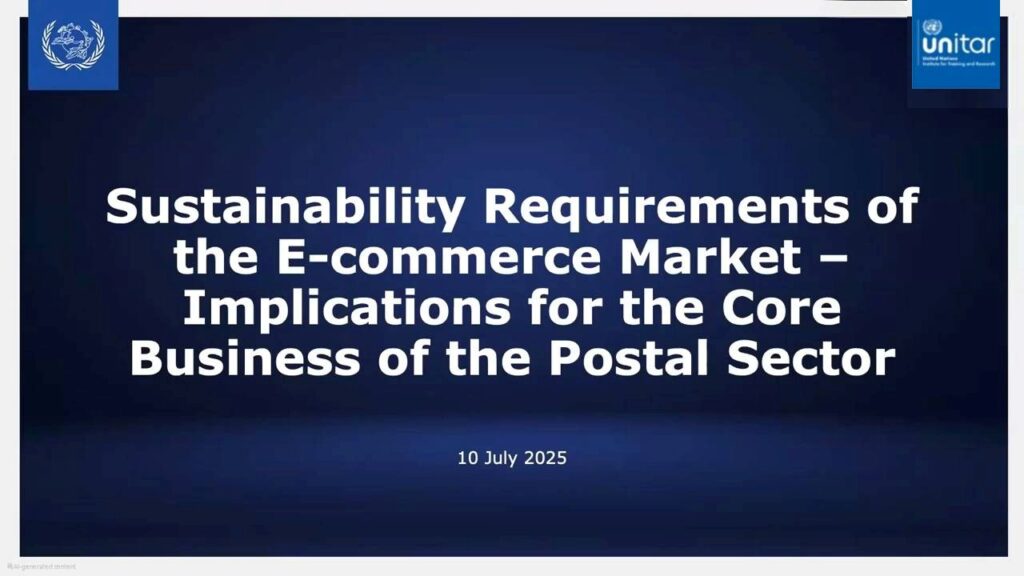
เมื่อวันที่ 10 กรกฎาคม พ.ศ. 2568 รศ.ดร.จรรยา ชาญชัยชูจิต ได้รับเกียรติเข้าร่วมบรรยายในหัวข้อ “Sustainable Requirements of the E-Commerce Market Implication for the Core Business of the Postal Sector” ซึ่งจัดขึ้นโดย สหภาพสากลไปรษณีย์ (Universal Postal Union : UPU) ร่วมกับ สถาบันฝึกอบรมและวิจัยแห่งสหประชาชาติ (United Nations Institute for Training and Research: UNITAR) โดยมีผู้เข้าร่วมกว่า 60 คนจากหน่วยงานที่เกี่ยวข้องกับการขนส่งไปรษณียภัณฑ์และพัสดุภัณฑ์ทั้งจากภาครัฐและและเอกชนที่เป็นสมาชิก UPU จากทั่วโลก
สัมมนานี้มีวิทยากรผู้เชี่ยวชาญ 3 ท่านร่วมแบ่งปันมุมมอง ได้แก่ Ms. Yaxuan Chen, Sustainability Service Expert จาก UPU ที่กล่าวถึงแนวโน้มด้าน ESG โดยเฉพาะ Scope 3 และบรรจุภัณฑ์ที่เป็นจุดเน้นทางสิ่งแวดล้อม ซึ่งกำลังกลายเป็นข้อกำหนดพื้นฐานของการเข้าถึงตลาดสำหรับผู้ให้บริการโลจิสติกส์ และ Ms. Betul Yilmaz, Specialist Sectoral Competition Department, Information and Communication Technologies Authority (BTK) จาก ประเทศตุรกี ที่ได้นำเสนอแนวทางการกำกับดูแลที่เกี่ยวข้องกับมาตรฐานความยั่งยืนที่กำหนดโดยแพลตฟอร์มอีคอมเมิร์ซ และผลกระทบต่อการแข่งขันและการคุ้มครองผู้บริโภค
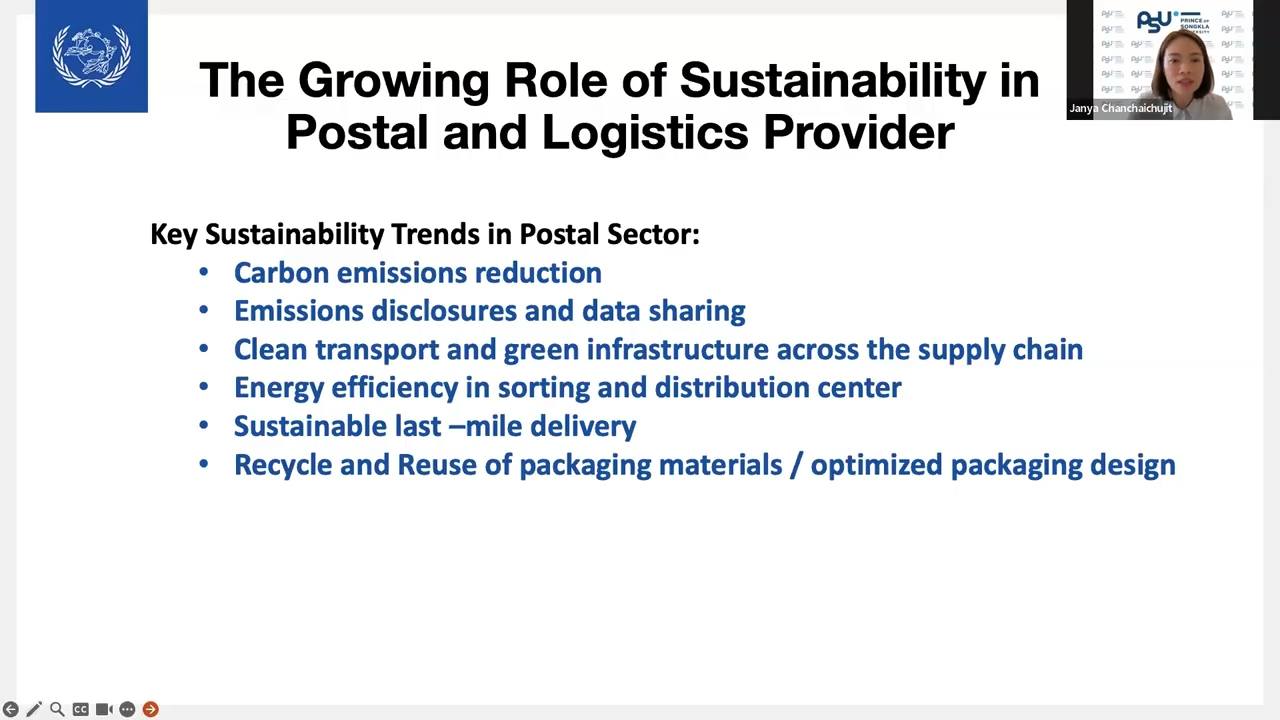
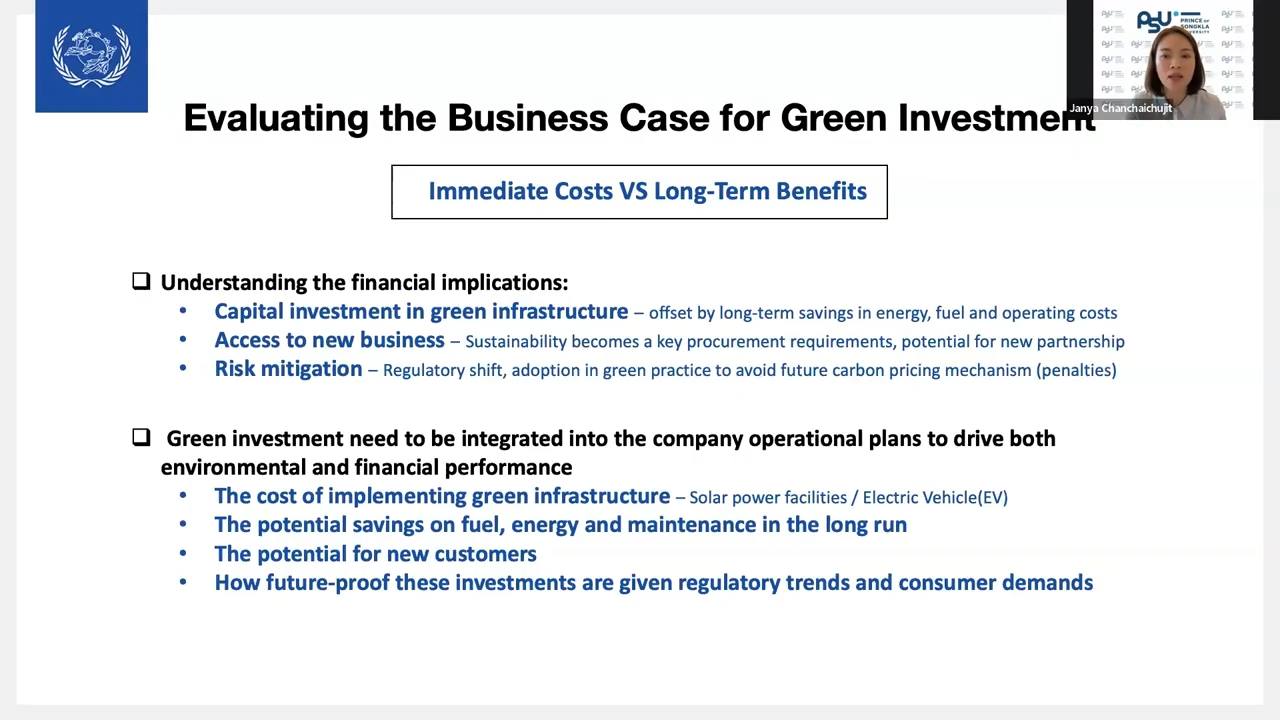
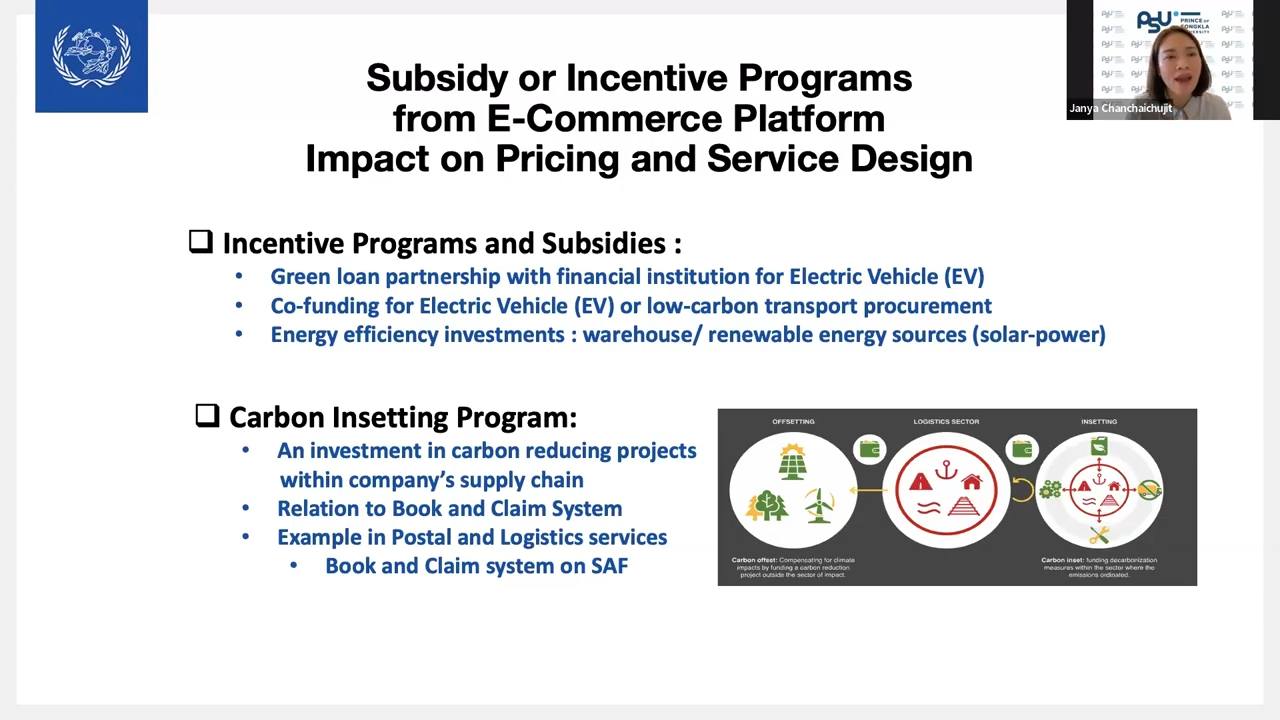
รศ.ดร.จรรยา ชาญชัยชูจิต ศูนย์การจัดการโลจิสติกส์และซัพพลายเชนอย่างยั่งยืน คณะการจัดการสิ่งแวดล้อม มหาวิทยาลัยสงขลานครินทร์ ได้นำเสนอแนวทางการปรับตัวของผู้ให้บริการไปรษณีย์และโลจิสติกส์ ทั้งในด้านการเปิดเผยข้อมูลคาร์บอน การลงทุนในโครงสร้างพื้นฐานสีเขียว การออกแบบบริการขนส่งระยะสุดท้าย (Last-Mile Delivery) อย่างยั่งยืน และการใช้กลไก “Book and Claim” ในการจัดการเครดิตคาร์บอน พร้อมยกตัวอย่างการจัดซื้อ EV ผ่านความร่วมมือกับสถาบันการเงิน และการติดตั้งพลังงานแสงอาทิตย์ในคลังสินค้า
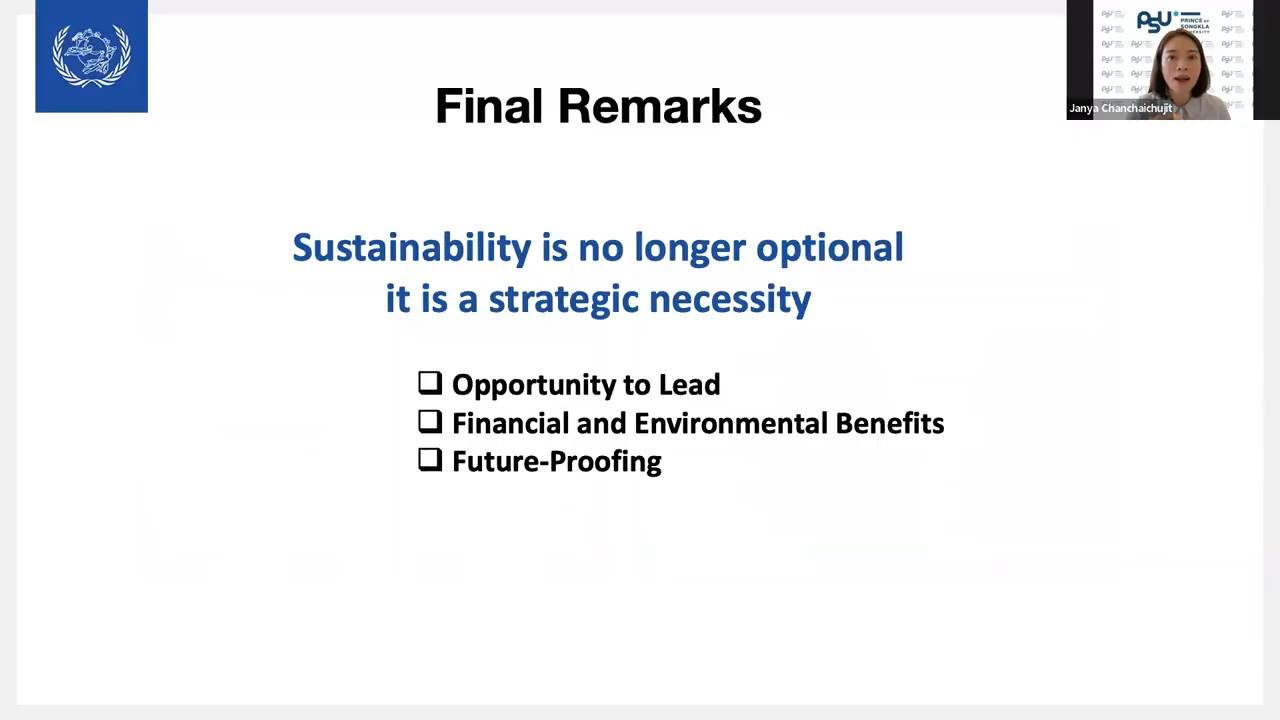
โดย รศ.ดร.จรรยา ชาญชัยชูจิต เน้นย้ำว่า ความยั่งยืนไม่ใช่เพียงทางเลือกเสริมอีกต่อไป แต่เป็นเงื่อนไขสำคัญในการแข่งขันและรักษาความสัมพันธ์ทางธุรกิจในระบบนิเวศของอีคอมเมิร์ซในปัจจุบัน และแนะนำให้ผู้ให้บริการไปรษณีย์จัดทำแผนลดการปล่อยคาร์บอน (Decarbonization Roadmap) ที่ชัดเจน พร้อมใช้ประโยชน์จากโอกาสทางการเงินและนโยบายเพื่อขับเคลื่อนสู่อนาคตคาร์บอนต่ำ
On 10 July 2025, Assoc. Prof. Dr. Janya Chanchaichujit was invited to speak at the global webinar “Sustainability Requirements of the E-commerce Market – Implications for the Core Business of the Postal Sector” co-organized by the Universal Postal Union (UPU) and the United Nations Institute for Training and Research (UNITAR). The event brought together over 60 participants from postal operators, regulators, and ministries across the world.
The session featured three key speakers. Ms. Yaxuan Chen, Sustainability Service Expert from UPU opened with insights on how sustainability trends, especially Scope 3 emissions and packaging reduction, are increasingly embedded in the operations of major e-commerce platforms. He emphasized that ESG signals from investors are becoming market-access requirements for postal and logistics providers. Ms. Betül Yilmaz, from Türkiye’s Information and Communication Technologies Authority (BTK), Turkey explored the regulatory implications of these de facto standards and stressed the need for alignment with national competition, consumer protection, and climate goals.
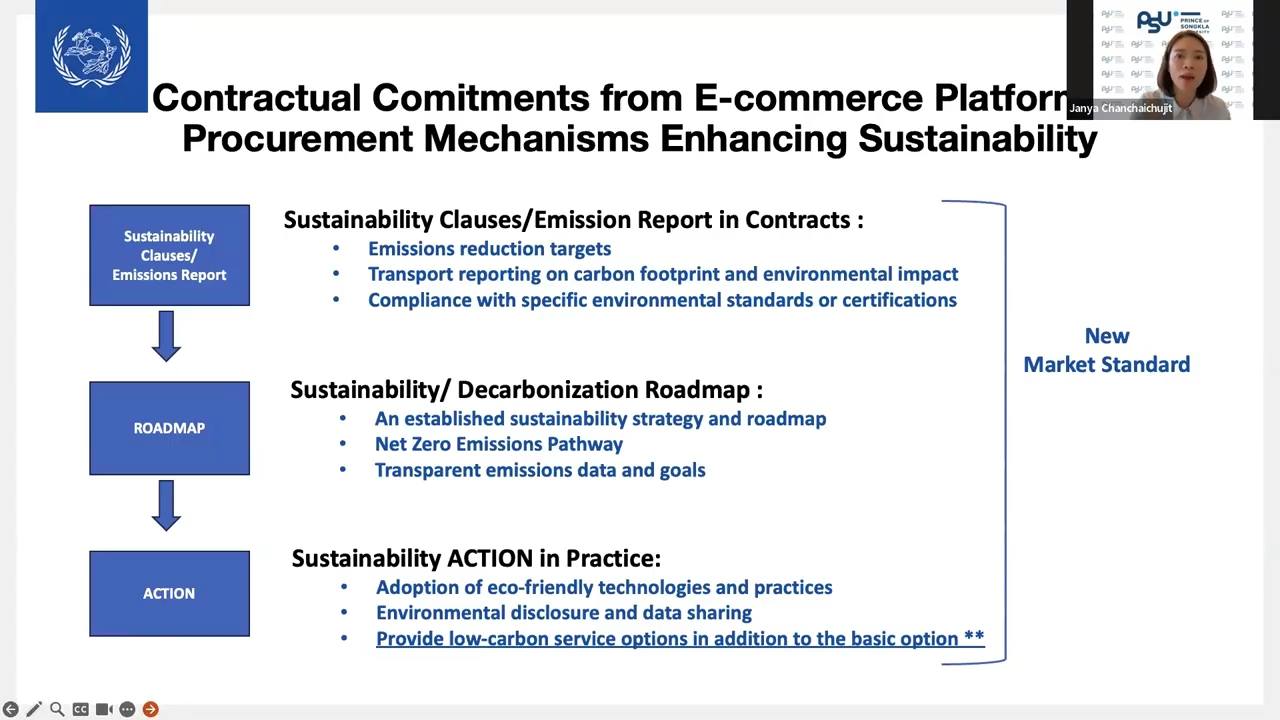
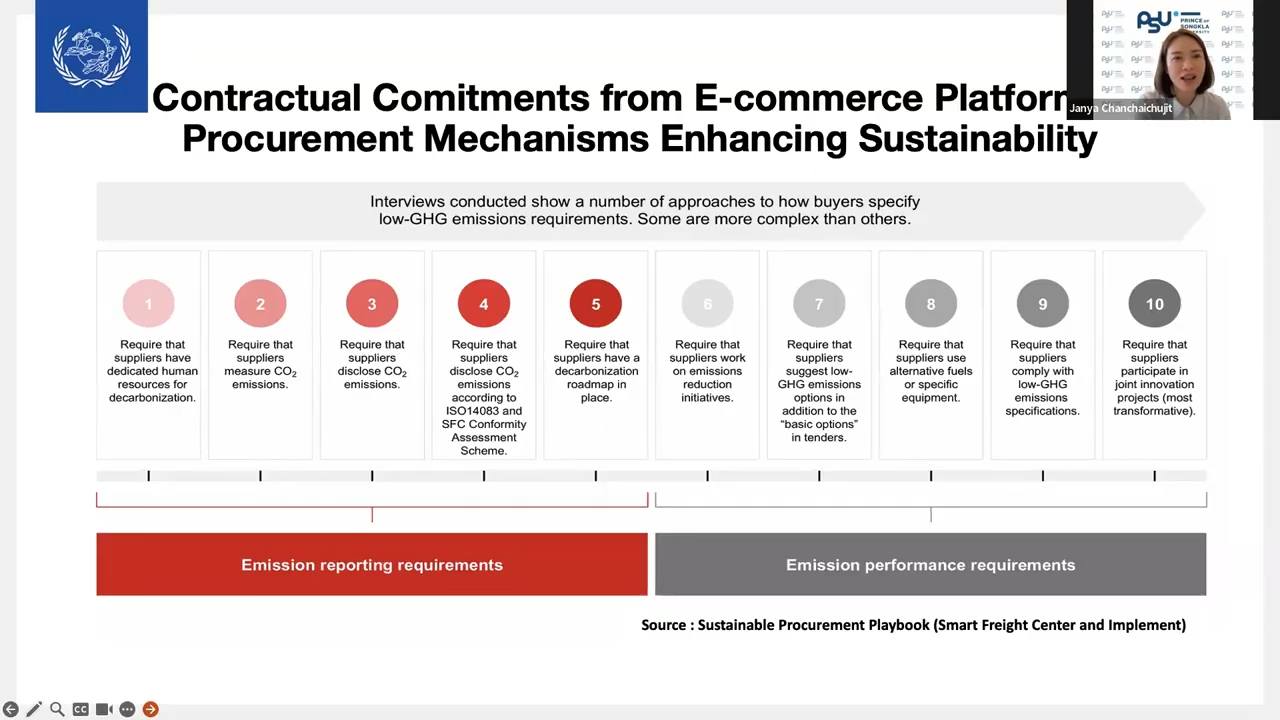
Representing the logistics provider perspective, Assoc. Prof. Dr. Janya Chanchaichujit highlighted practical trends impacting postal operations, including emissions disclosure, investment in green infrastructure, last-mile sustainability, and carbon insetting practices. She shared examples of sustainability clauses in commercial contracts, the use of book-and-claim mechanisms for carbon credits, and green financing models such as EV co-funding and solar-powered warehousing.
Her presentation emphasized that sustainability is no longer a side topic but a core factor in maintaining business partnerships and competitiveness in the e-commerce ecosystem. She encouraged postal operators to develop clear decarbonization roadmaps and seize financial and regulatory incentives to lead the transition toward low-carbon logistics.
== 𝐖𝐞 𝐚𝐢𝐦 𝐭𝐨 𝐭𝐮𝐫𝐧𝐢𝐧𝐠 𝐫𝐞𝐬𝐞𝐚𝐫𝐜𝐡 𝐢𝐧𝐭𝐨 𝐫𝐞𝐚𝐥-𝐰𝐨𝐫𝐥𝐝 𝐬𝐨𝐥𝐮𝐭𝐢𝐨𝐧𝐬 ==